Redesigning Core Product Workflows
Redesigning a Complex Platform for Scale
BindPlane is a platform that helps engineering teams manage how system data flows into monitoring tools, without becoming dependent on a single provider.
I worked as the UX/UI Designer, collaborating with a Product Manager and full-stack engineers to redesign the BindPlane platform and improve its core configuration experience. My focus was on turning complex, engineering-heavy workflows into clear, scalable interfaces that are easier to understand, safer to change, and ready for real-world production use.
My Role — UX/UI Designer
I led the redesign of the BindPlane platform, working closely with a Product Manager and full-stack engineers. I simplified complex configuration workflows and redesigned the core configuration feature to create a clearer, safer, and more scalable product experience.
My Responsibilities
- Translating highly technical concepts (OpenTelemetry, pipelines, exporters, processors) into understandable user flows
- Defining information architecture for complex configuration screens
- Designing user flows for setup, configuration, and ongoing management
- Creating low- and high-fidelity wireframes and UI designs in Figma
- Iterating designs based on engineering feedback and real product constraints
Core Problems
The platform didn’t scale with growth
As customer adoption increased, the product structure struggled to support growing teams, environments, and use cases.
The product didn’t align with user workflows
The design reflected internal technical logic rather than how users actually think and work, creating confusion and inefficiency.
Changes didn’t feel safe or predictable
Limited clarity around the impact of actions made users hesitant to make updates or improvements.
Key Constraints
Predefined color palette
The platform had an existing color palette that needed to be preserved to maintain brand consistency and avoid rework before launch.
Technical constraints
Design decisions had to align with existing architecture and development timelines, requiring close collaboration with full-stack engineers.
MUI component library
The interface was built using the Material UI (MUI) library, which meant designs needed to work within predefined components and patterns.
Limited scope for MVP launch
Major interface changes were intentionally avoided to support a faster MVP release, focusing improvements on clarity, structure, and usability rather than visual overhaul.
Overview Page (Topology)
Problem Statement
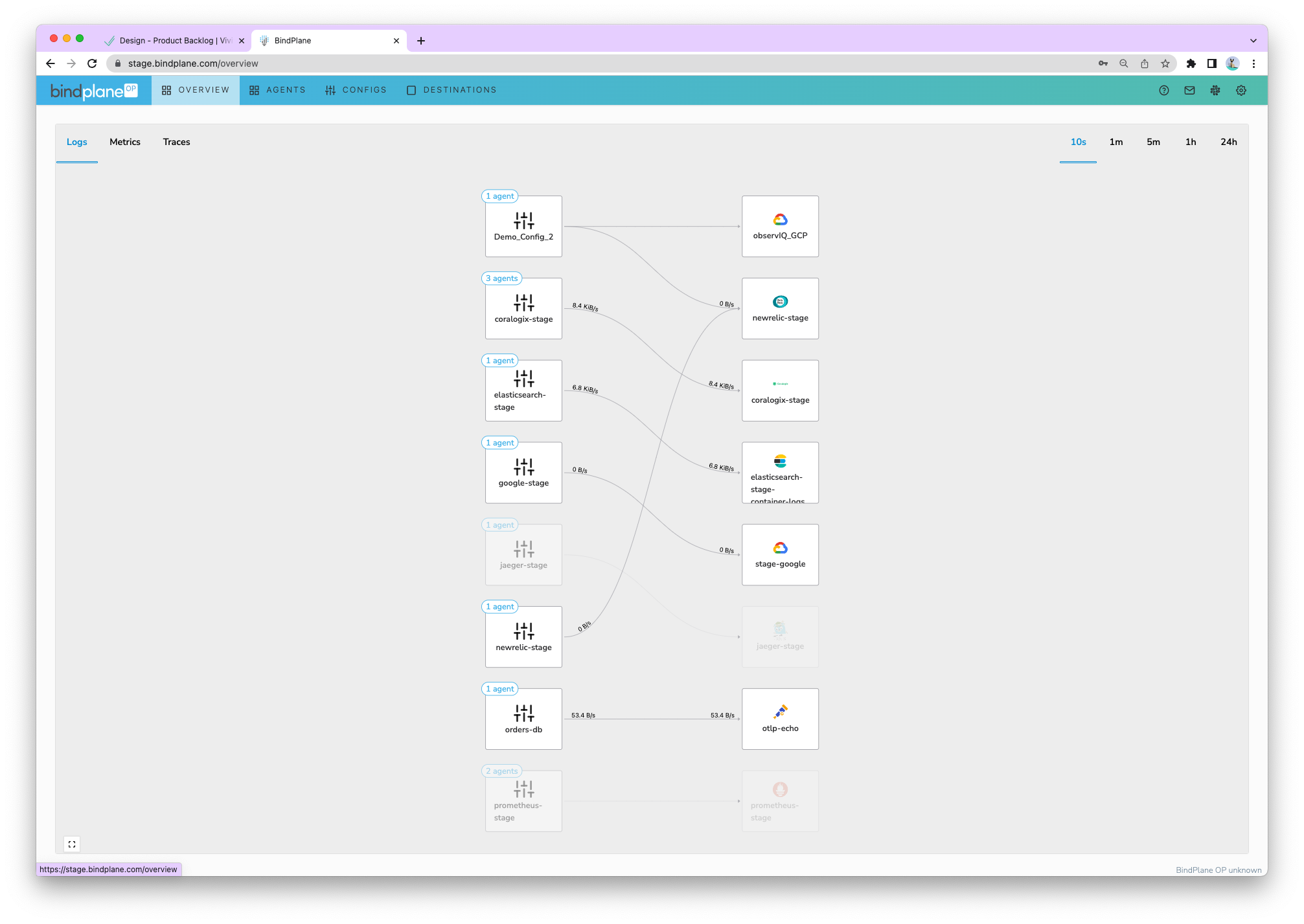
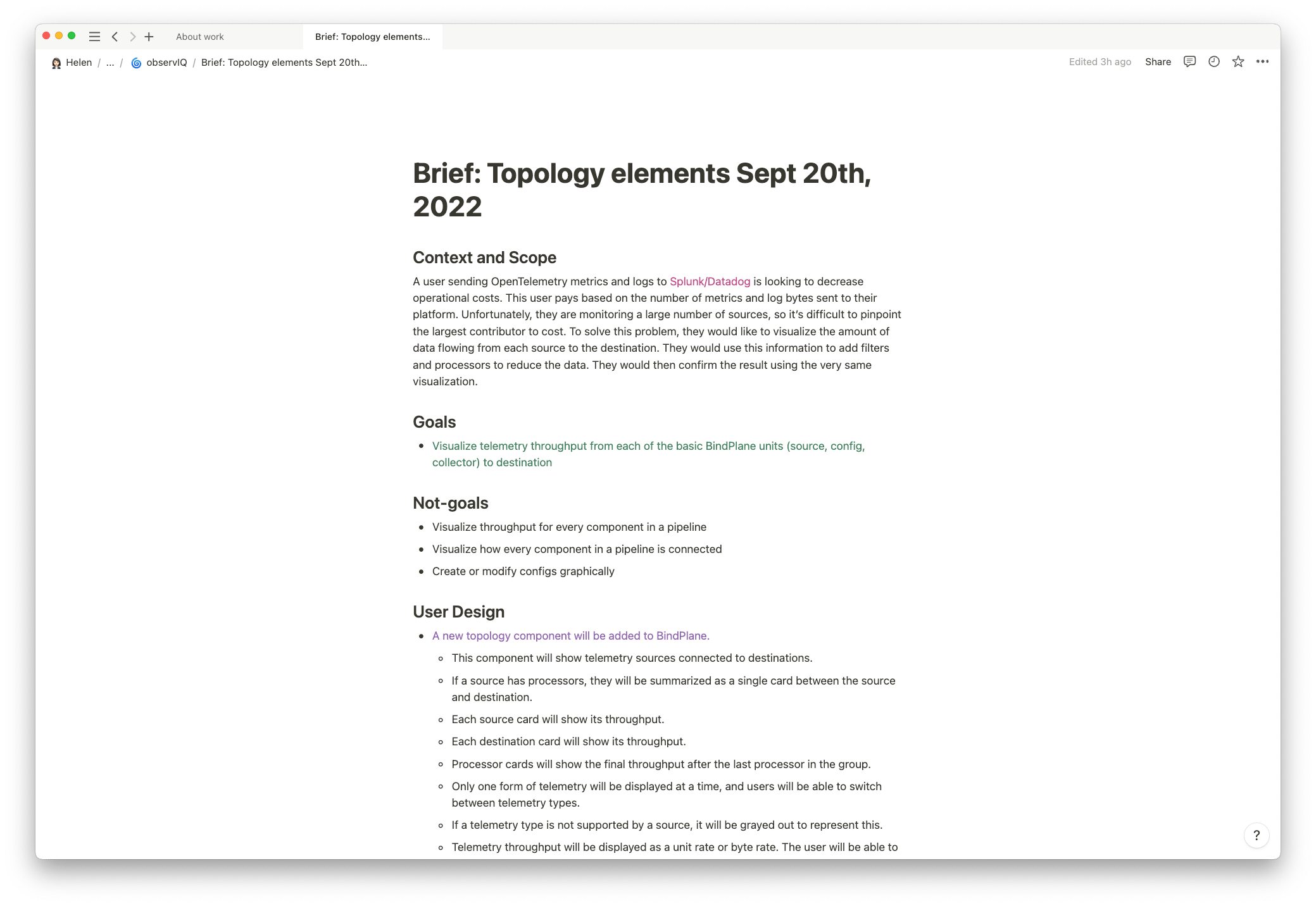
Engineering teams send large volumes of system data to monitoring tools like Splunk or Datadog and are charged based on how much data they send. As systems grow, it becomes difficult to understand which sources generate the most data and drive up costs. Without clear visibility into data flow, teams struggle to identify cost drivers, confidently reduce data volume, and verify whether their changes are actually effective.
Design Goal
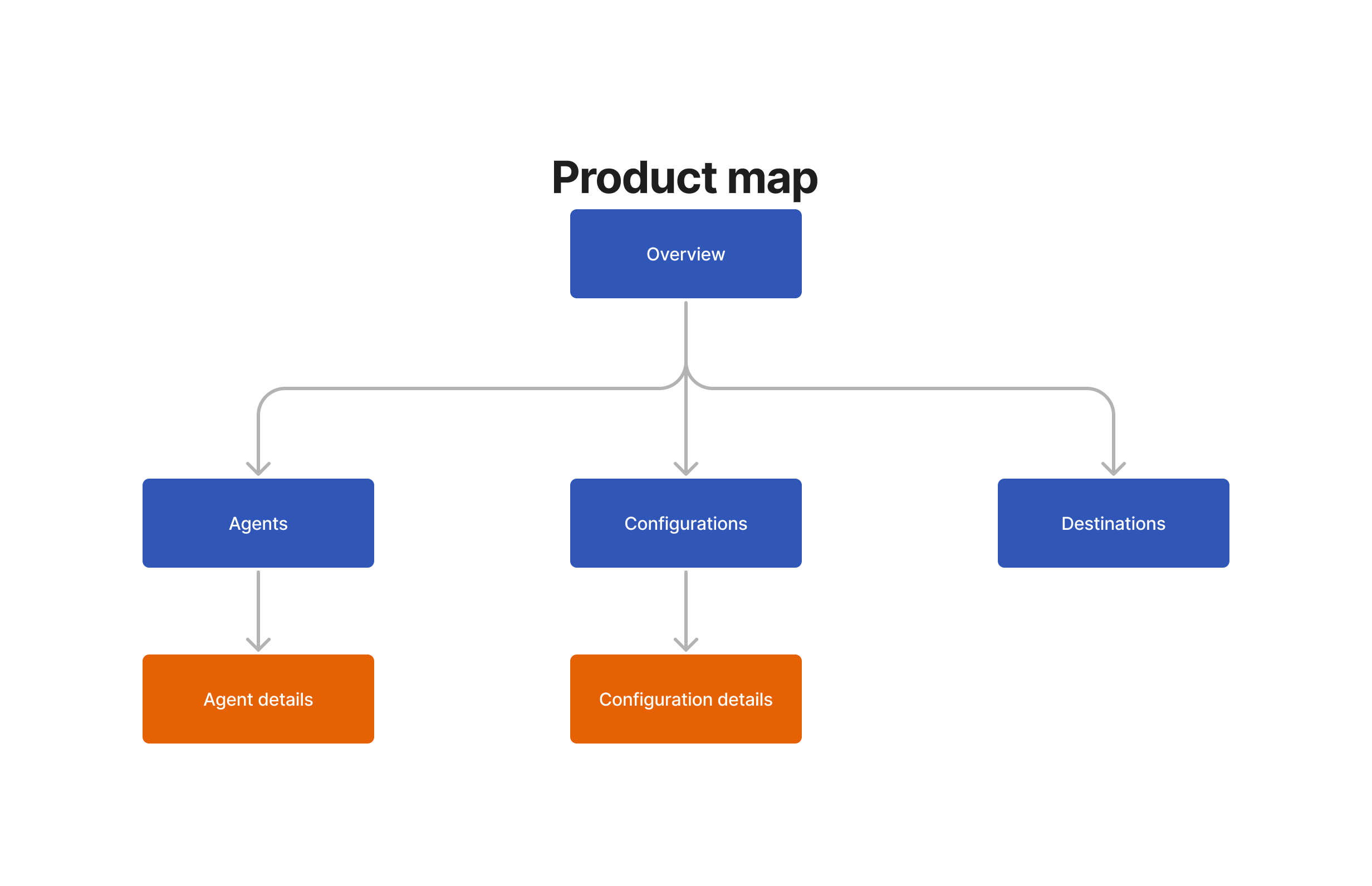
Visualize telemetry throughput from each of the basic BindPlane units (source, config, collector) to destination
Solution
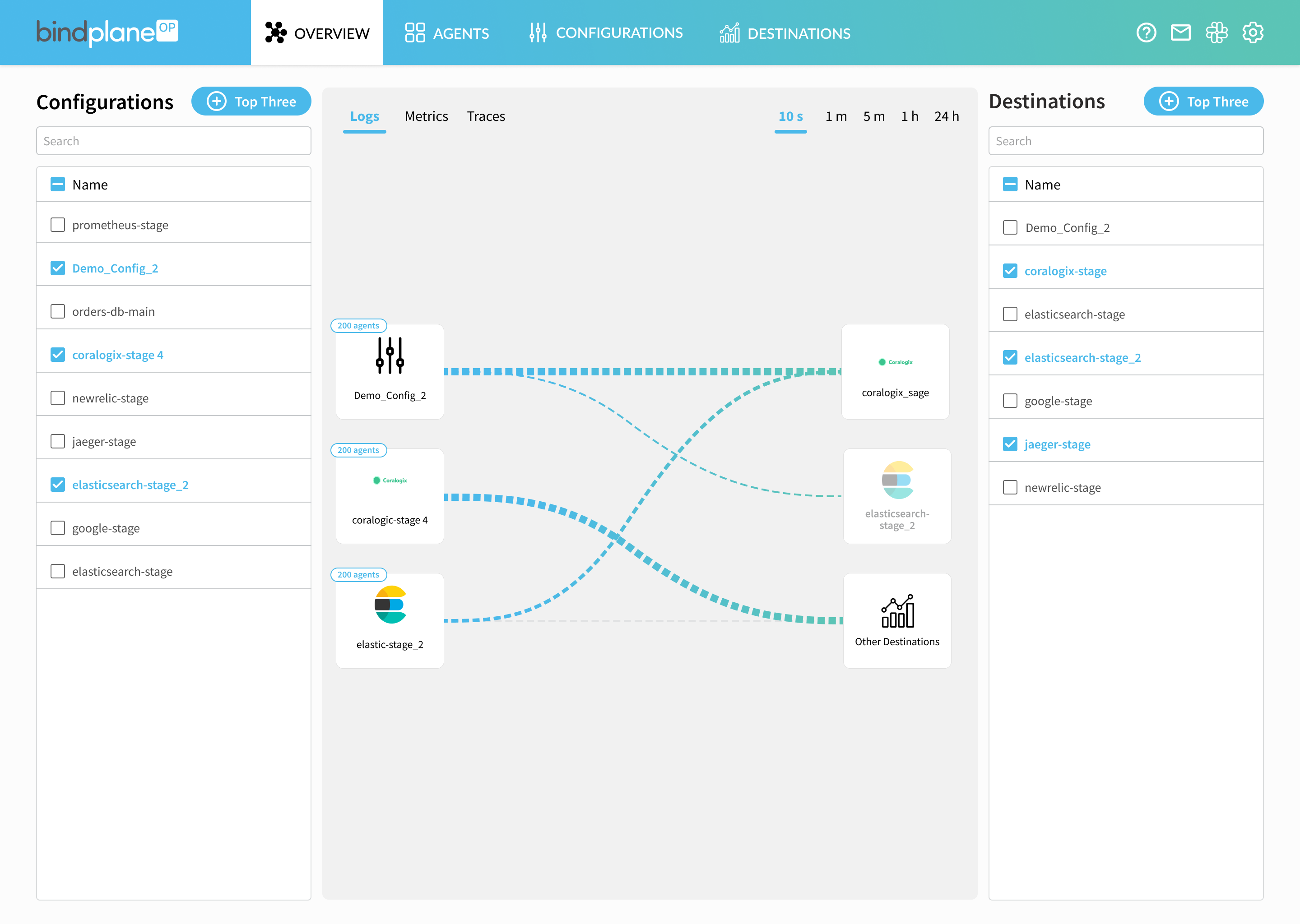
Instead of passively displaying data, the Overview page enables users to quickly focus on what matters, explore configurations, and take action. This shifts the page from a read-only dashboard to a workspace that supports real operational decisions.
Impact
- Made complex data flows easier to understand through clear visual representation
- Helped users identify high-impact configurations and make more informed decisions
- Improved confidence and efficiency when managing and updating configurations
Configurations and Deployment
Problem Statement
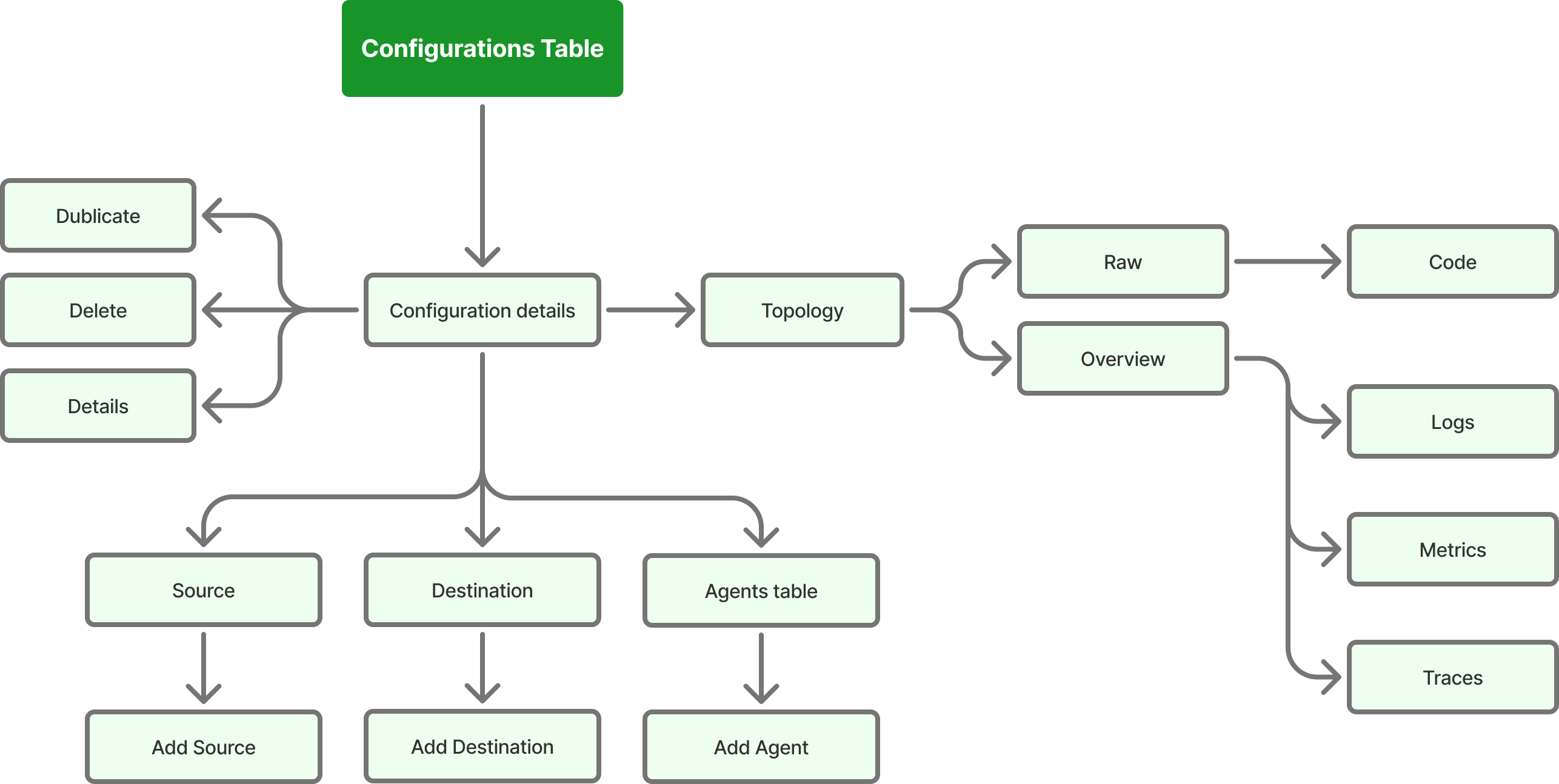
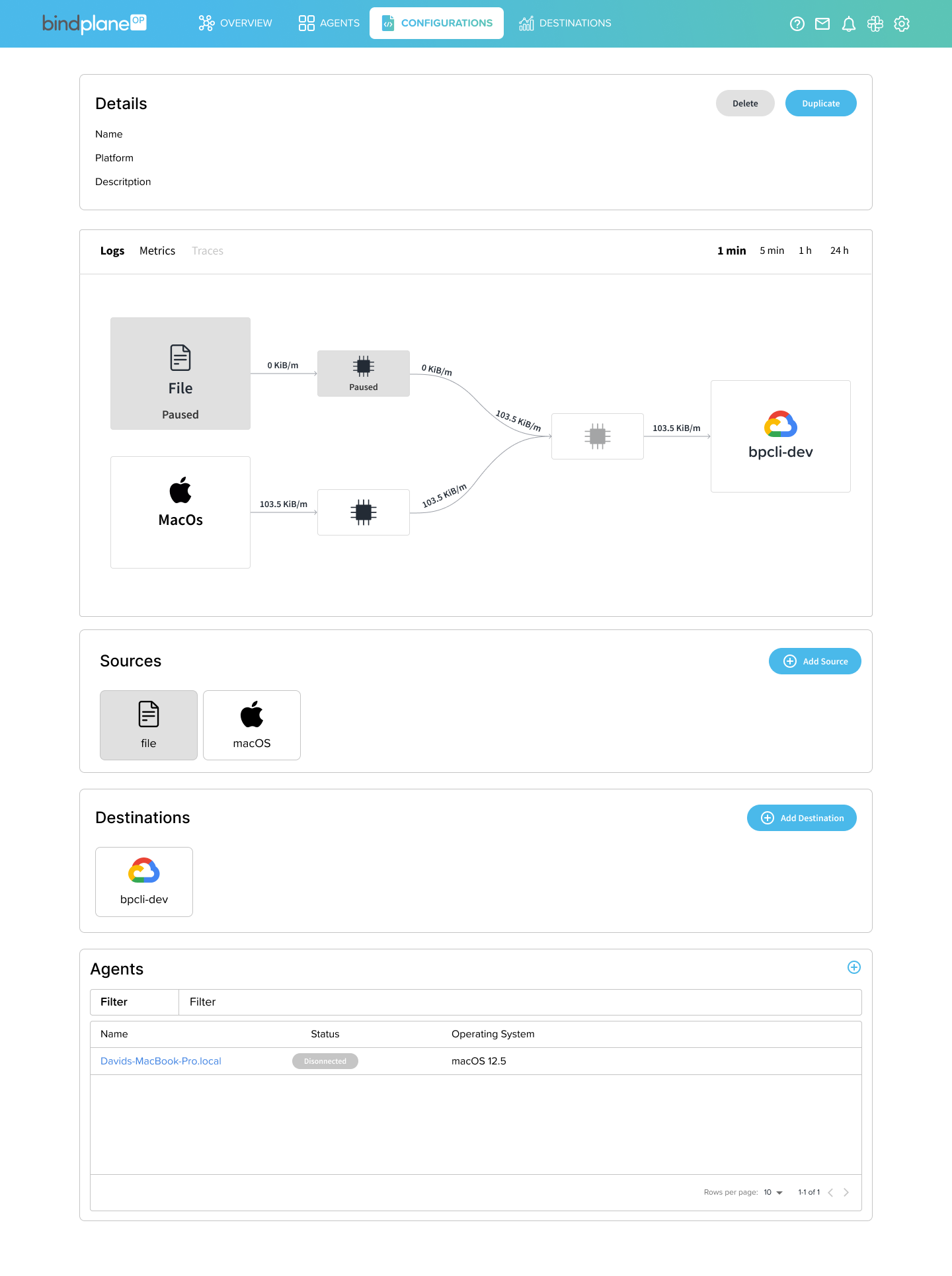
Users need a clear and reliable way to edit, review, and deploy configurations across multiple agents from a single interface. Limited visibility into configuration changes and deployment status makes it difficult to understand the impact of updates.
At the same time, unrestricted access allows any user to modify and deploy configurations that affect multiple agents, increasing the risk of errors and unnecessary data costs. The product needed a more controlled and transparent experience that supports confident configuration changes while reducing operational risk.
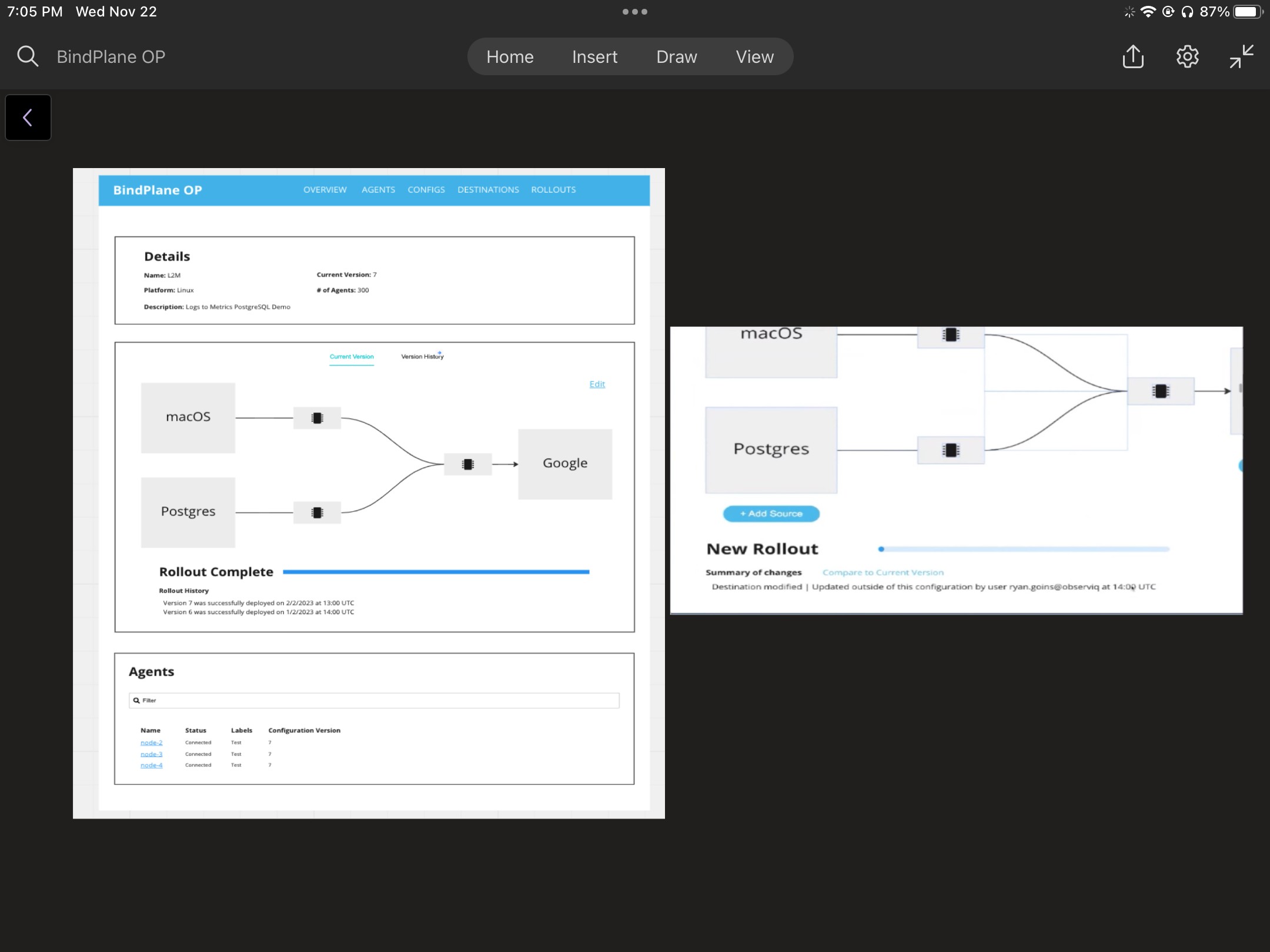
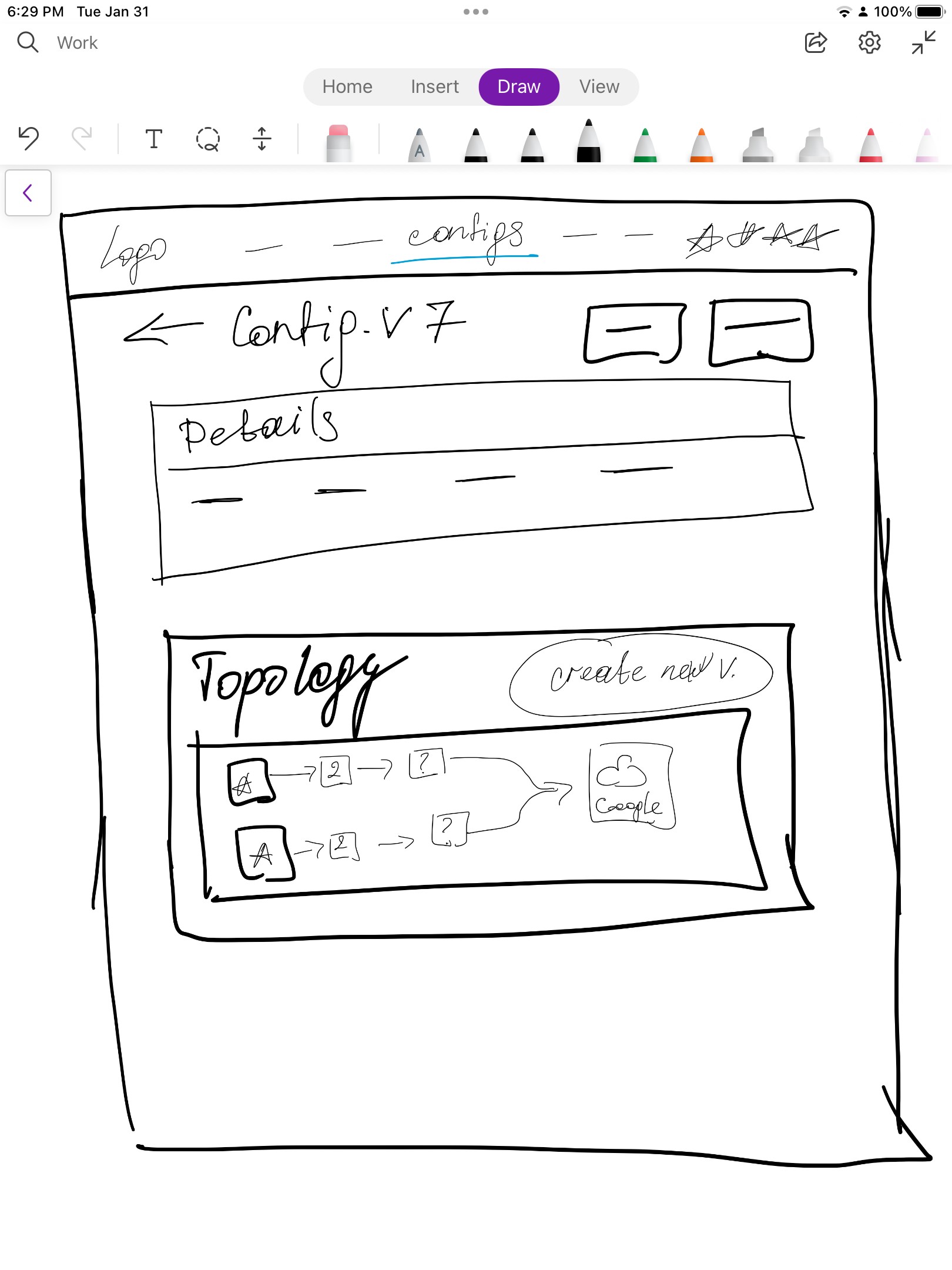
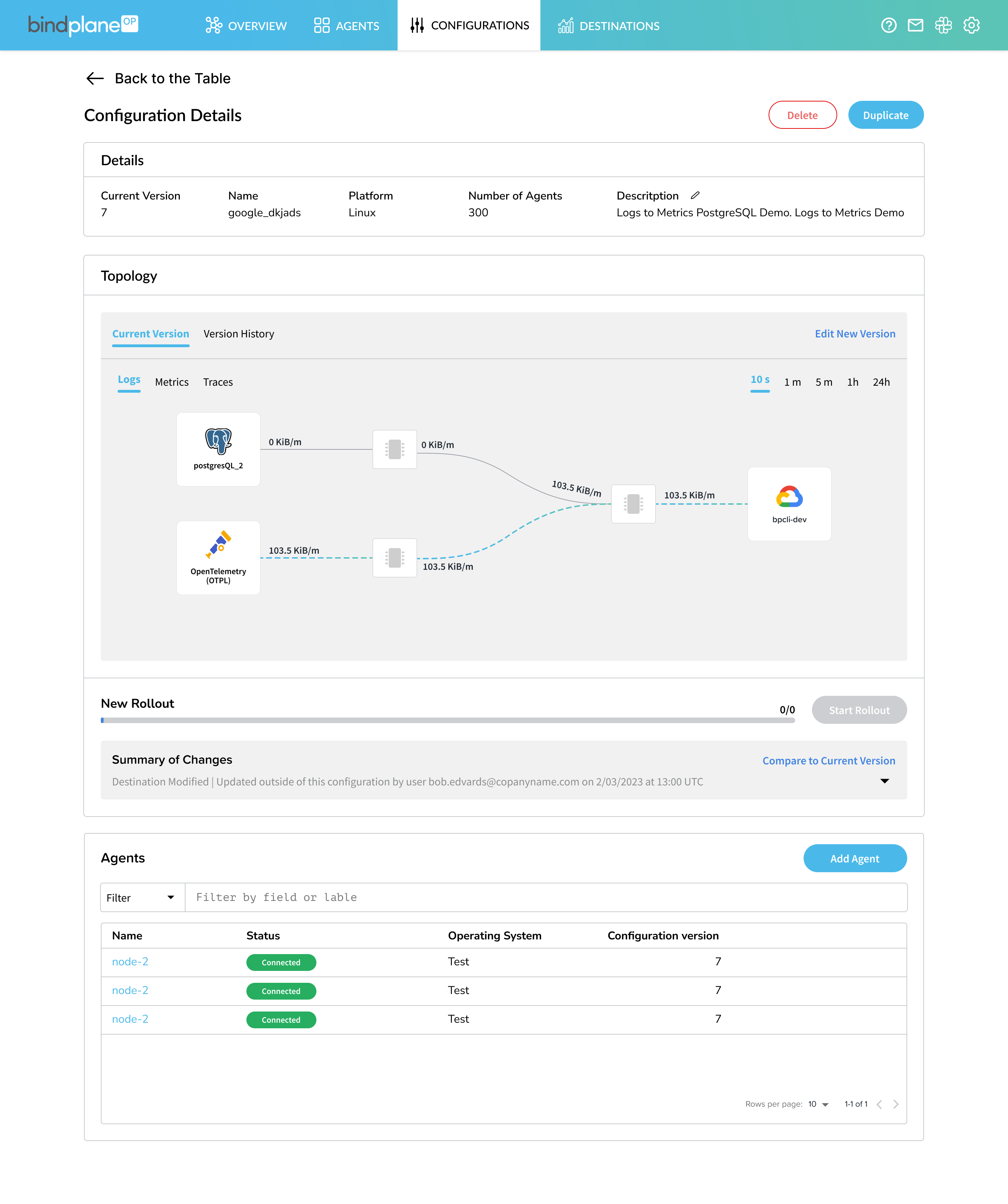
Solution - Role-Based Configuration & Deployment
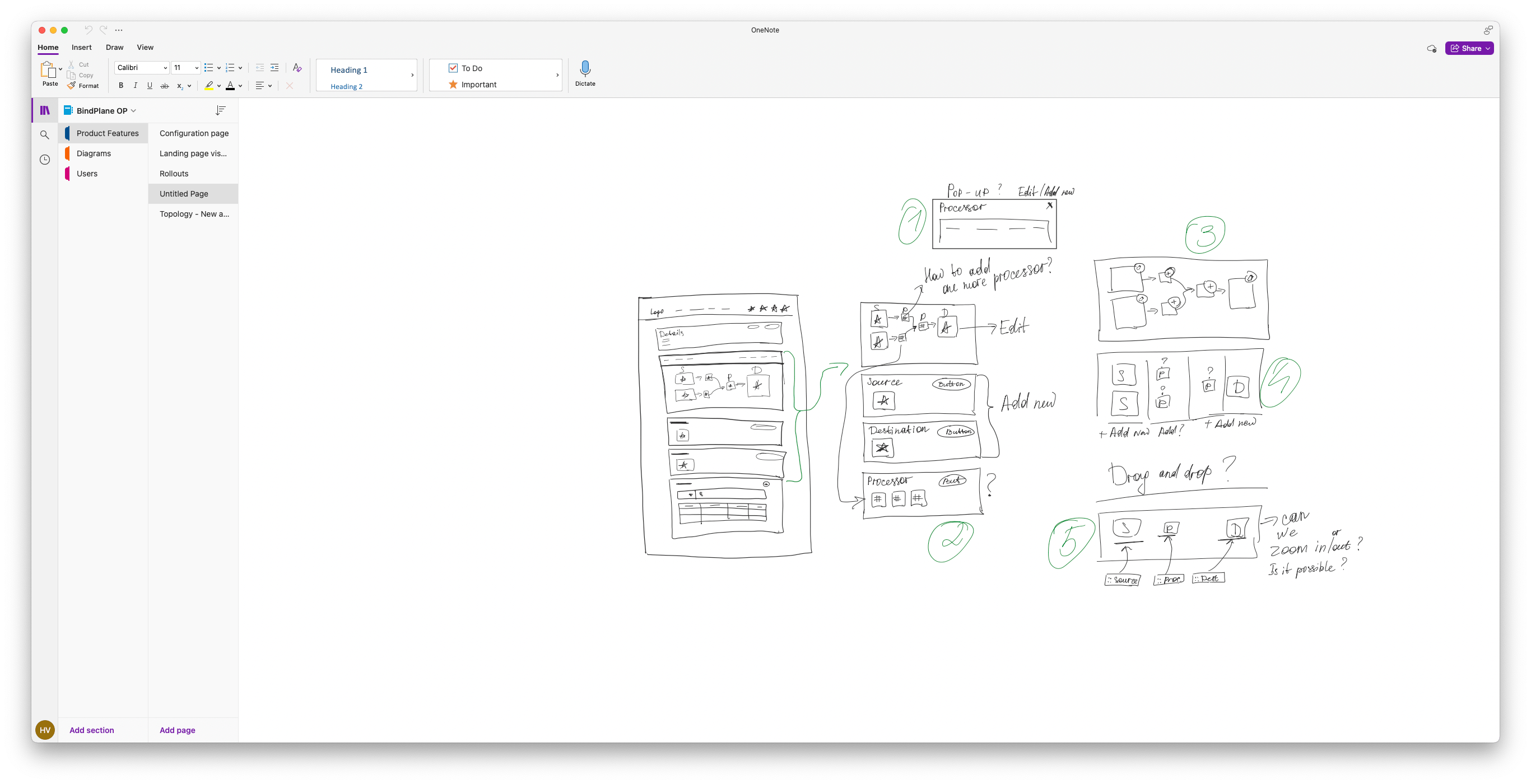
Multiple people could work on the same configuration, so it was important to clearly show what changed and who made updates to avoid mistakes. Since deployments can affect system costs, rollout actions were limited in the MVP to reduce risk and support a safe launch. I reflected these constraints in the design by making version history and deployment status easy to see. This helped teams review changes with confidence and reduced errors after release.
Impact
I helped turn a complex, high-risk configuration process into a clear and controlled experience that multiple teams could use with confidence. By introducing visible version history, deployment status, and role-aware workflows, I reduced the risk of errors and supported safer releases under tight technical and launch constraints. My work aligned user needs, business cost considerations, and enterprise requirements, helping the team ship a stable MVP while setting a clear foundation for future scalability.
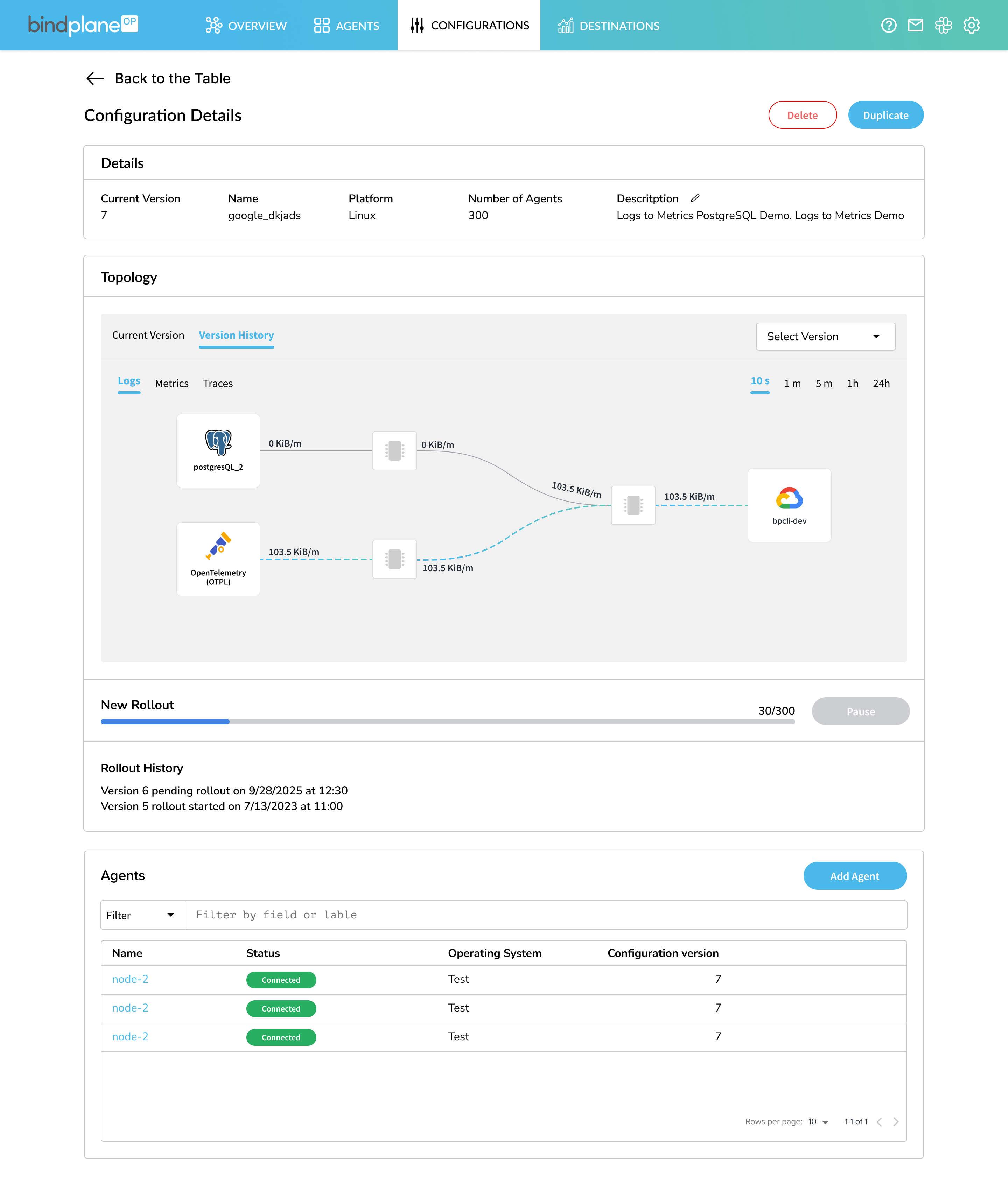
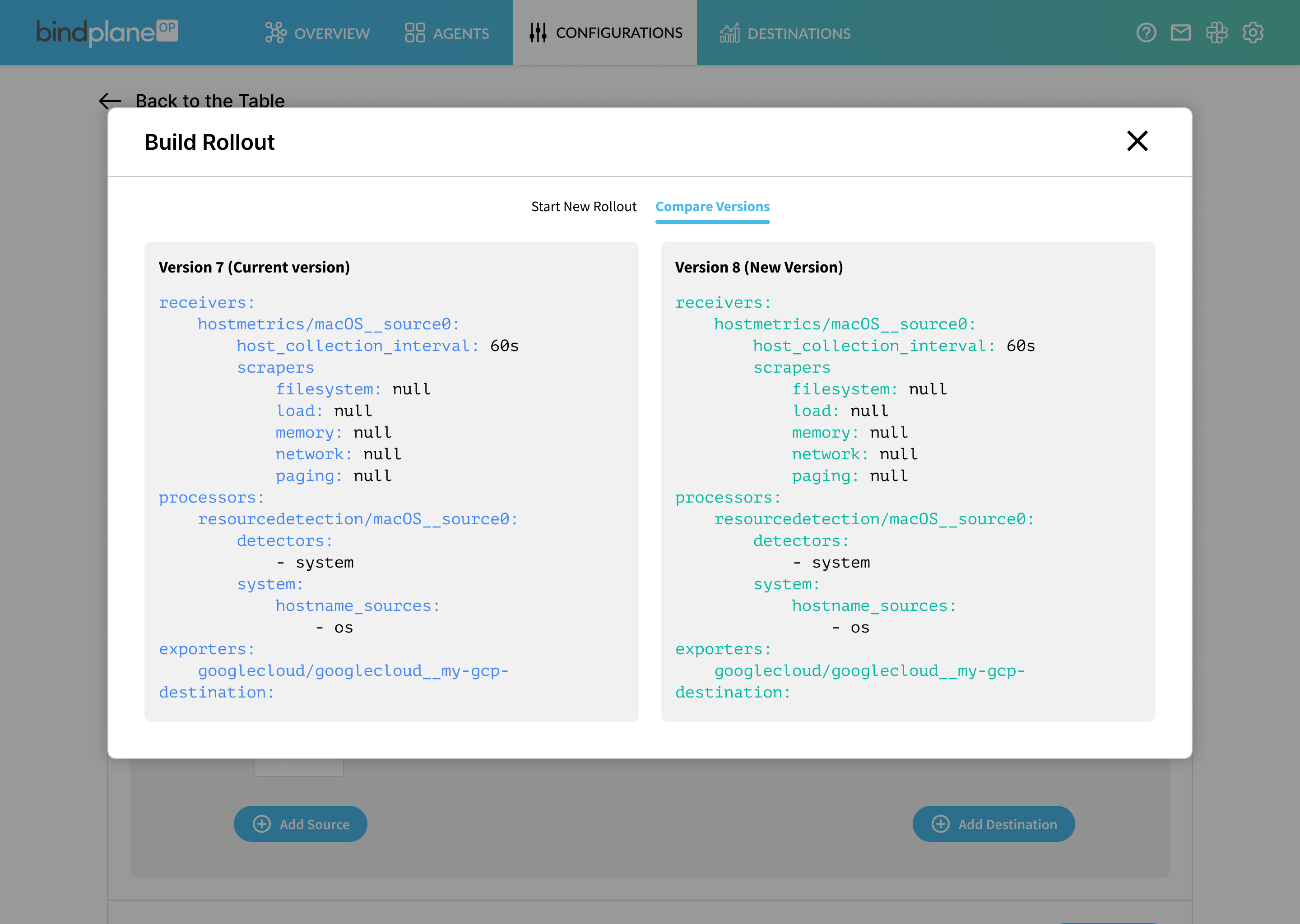
Solution - Version history
We introduced clear user roles to support safe collaboration on shared configurations. For the MVP, rollout capabilities were intentionally limited to a small set of users to reduce risk and meet launch deadlines, while editors focused on creating and updating configurations and managers had read-only access to cost and reporting insights. This approach allowed teams to move faster while protecting high-impact changes and laying the foundation for more robust permission controls in future iterations.
Impact
I helped turn a complex, high-risk configuration process into a clear and controlled experience that multiple teams could use with confidence. By introducing visible version history, deployment status, and role-aware workflows, I reduced the risk of errors and supported safer releases under tight technical and launch constraints. My work aligned user needs, business cost considerations, and enterprise requirements, helping the team ship a stable MVP while setting a clear foundation for future scalability.
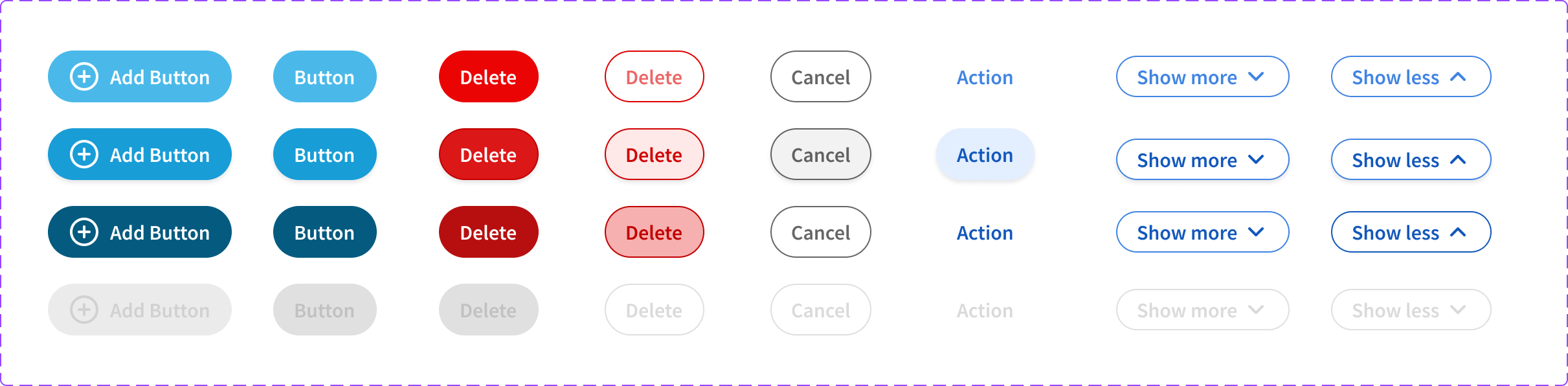
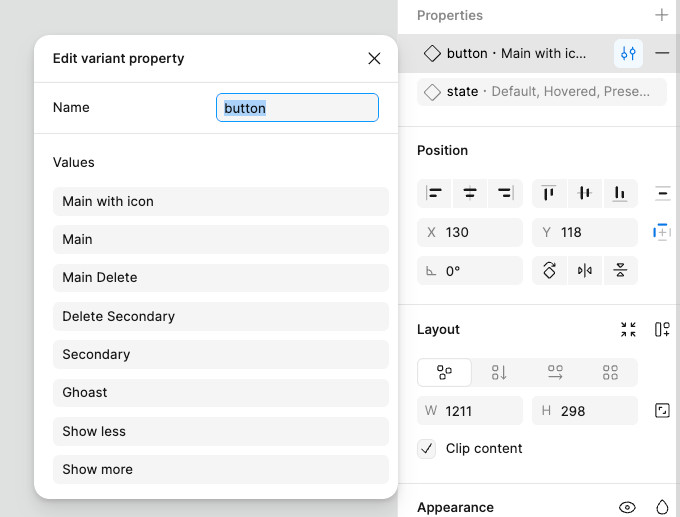
Design System
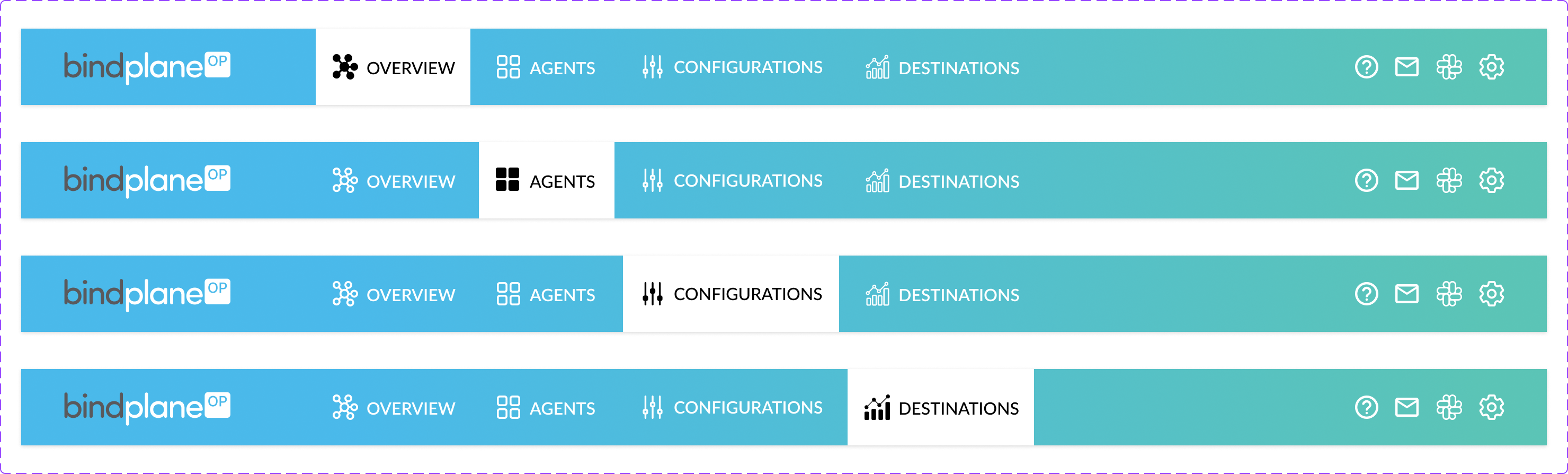
Top navigation
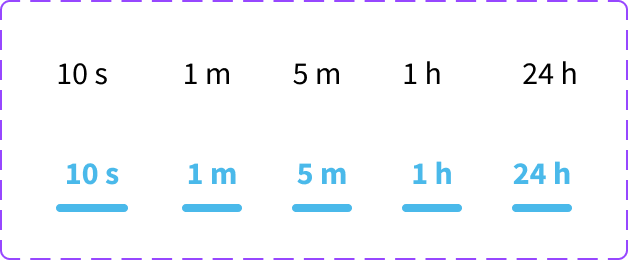
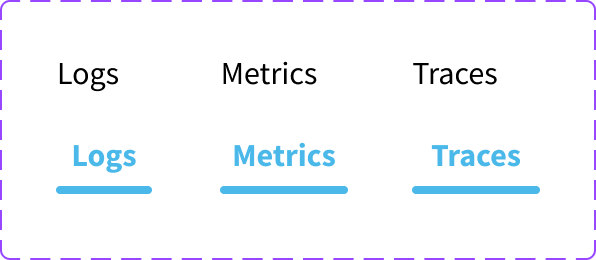
Tab navigation



Quench SmartCharts -
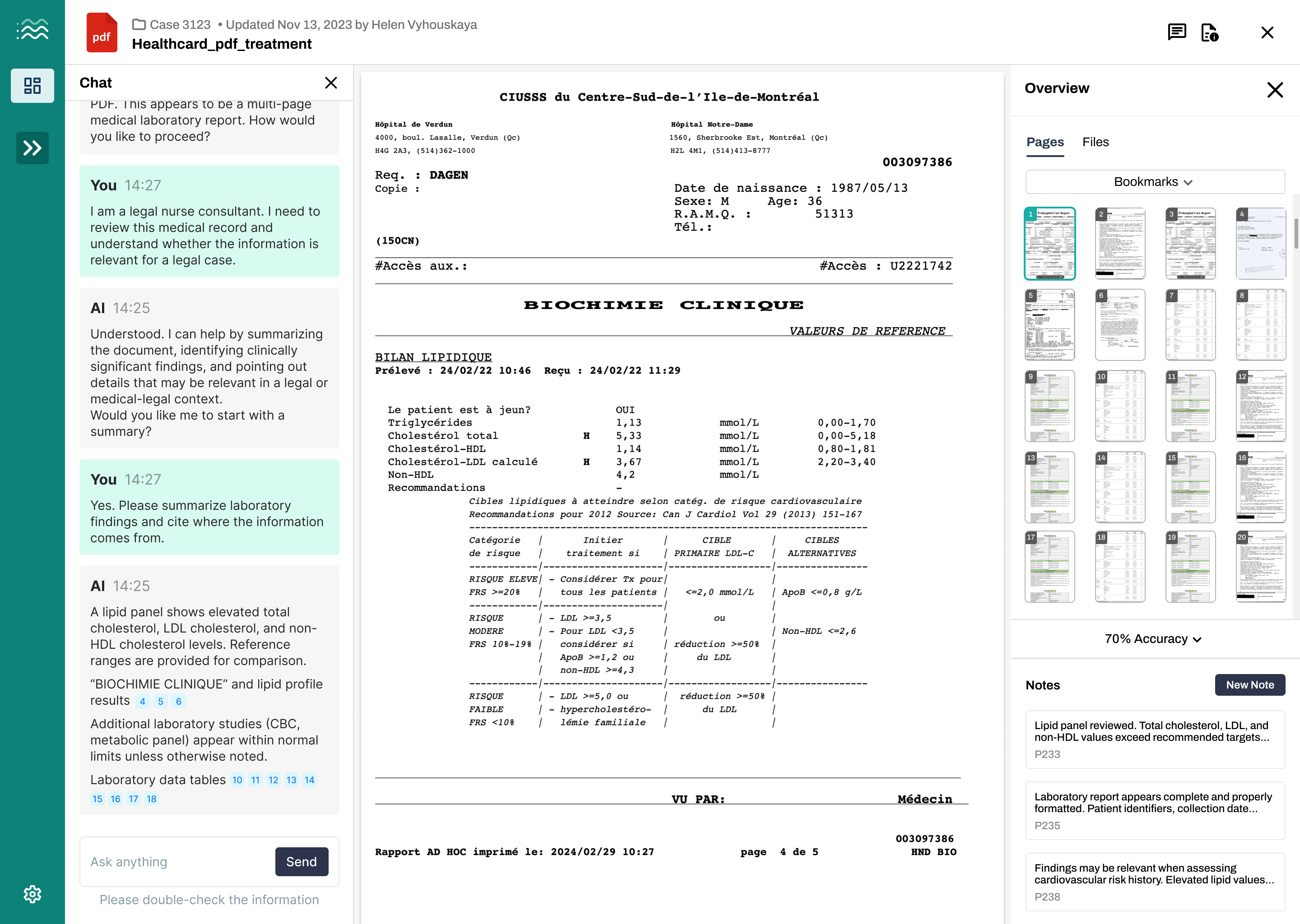
AI Assistant for Legal Nurses and Lawyers
Call out a feature, benefit, or value that can stand on its own.